

How to Choose the Right SDS Core Bit: Material and Job Condition Guide
Picking the right SDS core bit is rarely just about diameter. The material you’re cutting (concrete, reinforced concrete, brick, block, natural stone, tile) and the jobsite realities (wet vs dry, presence and density of rebar, abrasive aggregates, water/electrical access, overhead work) will change what bit actually performs and how long it lasts. A good decision blends three things: the cutting system (TCT vs welded TCT vs diamond), the working mode (wet vs dry), and the correct mounting/pilot arrangement — not just the size stamped on the box. Read on and you’ll get a practical run-through by material, tips for common failure modes, and a compact cheat-sheet for on-the-spot choices. At the end there’s a quick selection matrix, short FAQ, and a buying checklist you can use before you order or head to site.
Quick Primer: Types of SDS Core Bit Cutting Systems (TCT, Welded TCT, Diamond, Sintered Diamond)
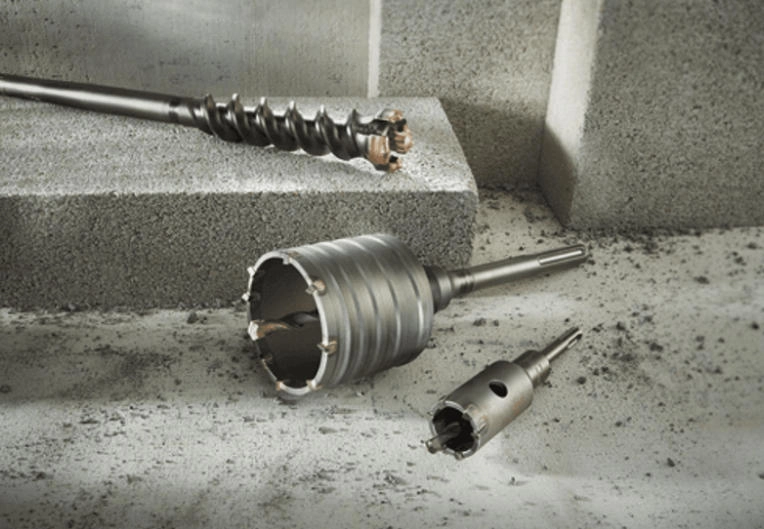
There are four practical families you’ll meet on the job: plain TCT (tungsten-carbide tipped) teeth, welded / reinforced TCT, electroplated or vacuum-brazed diamond, and sintered (metal-bond) diamond segments. TCT teeth are the low-cost, general-purpose option that cut quickly in softer masonry and light concrete — they’re forgiving in short, ad-hoc holes and easy to replace. Welded or reinforced TCT builds on that with stronger brazes and heavier tips for chunkier aggregate or denser mixes. Diamond systems split into thin-coating electroplated or vacuum-brazed types (good for porcelain, tile, and very clean finishes) and sintered/metal-bond diamond segments (best for hard concrete, stone and production coring). Each class trades cost, finish, and rebar tolerance differently — and the best match depends on whether you’ll be repeatedly coring hard mixes or just knocking out the occasional conduit hole.
Tungsten Carbide Tipped (TCT) core bits — where they shine
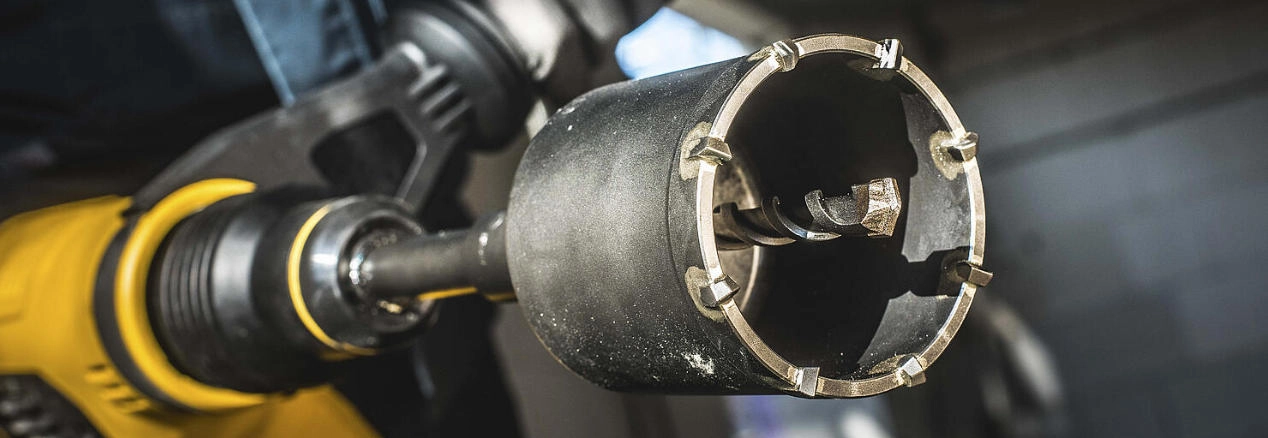
TCT core bits are workhorses when the concrete is medium-strength, aggregates are not excessively abrasive, and rebar strikes are rare. They perform well in blockwork, hollow brick, softer natural stone and low-strength cast concrete. The chief advantages are low purchase price and quick replacement; on one-off jobs this often beats more expensive options. In practice, TCT runs best when feed rates are steady and speeds are moderate — hammer action does most of the work while the TCT teeth shear the matrix. Their weakness is blunt: high strength concrete, frequent rebar hits or quartz/basalt-rich mixes rapidly wear the carbide and can cause tooth chipping. For short penetrations in finished interiors (where wet coring is difficult) TCT may be the pragmatic choice, provided you accept a shorter life and a rougher hole edge. If you’re specifying for repeat work, test a TCT sample on the actual substrate before committing to a bulk buy.
High-frequency welded / reinforced TCT — improved durability
Welded or reinforced TCT variants are built for heavier duty where standard TCT fails — think thicker segment shoulders, higher brazing quality, and sometimes multiple carbide grades in a single tooth. You’ll see these on larger SDS-plus/-max units used for holes where chunks of aggregate are common or when slightly heavier rebar encounters are expected. The welding process and tooth geometry are improved to resist fracture and tooth loss; they won’t match diamond in life on hard mixes but close the gap for mixed masonry work at a lower cost. These bits are a common compromise for small contractors who face a range of substrates: better than basic TCT on abrasive aggregate, but still lighter and cheaper than sintered diamond barrels. When ordering, look for specs that call out brazing method and segment height — higher segments and robust welds equal longer life in mixed jobs.
Diamond (vacuum-brazed / electroplated / sintered) core bits — when to use diamond
Diamond core systems are the specialist option for hard, dense materials and finishes that demand clean edges — high-strength concrete, reinforced slabs where rebar is unavoidable, granite, marble, polished stone and glazed porcelain. Vacuum-brazed or electroplated diamonds suit very thin, delicate work (tiles, porcelain) where minimal chipping is critical; sintered/metal-bond diamond segments shine in production coring of granite and dense concrete because they balance cut rate and wear resistance. The big tradeoffs are cost and handling: diamond barrels cost more up front and require correct operating modes (speed, pressure, and usually water) to reach their life potential. That said, when you calculate cost per hole on hard substrates, diamonds often win because they stay sharp far longer. For contractors doing daily coring on tough mixes, investing in diamond bits — or at least a hybrid fleet — typically lowers total job cost.
When to avoid SDS core bits entirely (use a dedicated core rig or alternative)
SDS-mounted cores are convenient, but they’re not universal. Extremely thick structural slabs, heavily reinforced zones with dense, closely spaced rebar, or very large diameters (typically >150–200 mm depending on the SDS system) are better handled by a dedicated wet diamond coring rig. Rigs allow stable feed, water cooling and torque capacity that handheld SDS tools can’t match. If you expect to encounter frequent heavy rebar, or you’re cutting a series of large penetrations for MEP runs, renting a coring rig reduces bit damage, improves hole roundness and minimizes the risk of binding. In short: for one-off small holes, SDS is great; for production large holes or heavy rebar, plan on a rig.
Material-by-Material: Selection Rules and Practical Tips
Unreinforced Concrete and CMU (concrete masonry units)
For blockwork and lower-strength poured concrete, TCT and weld-reinforced TCT bits are the most cost-effective. They chew through mortar joints and soft aggregate efficiently and are forgiving if feed and speed aren’t perfect. Use wet drilling where ever practical — water reduces dust and cools the tip, extending life — but dry drilling is acceptable for short holes, provided you use dust extraction and intermittent pauses. If the concrete contains abrasive silica sand or recycled concrete with hard fragments, expect faster wear; in that case, stepping up to sintered diamond segments is a smart move for contractors who want predictable production rates. Practical tip: always check effective cutting depth versus block thickness; hollow blocks can snag if the barrel is too long, and thin faces benefit from backing supports or low feed to avoid blow-out.
Reinforced Concrete (rebar present)
Rebar changes everything. Sporadic thin rebar can sometimes be tolerated by heavy TCT with reinforced teeth, but frequent hits will blunt and chip carbide rapidly. For jobs where rebar is expected, choose diamond barrels designed for mixed metal and concrete cutting or use hybrid workflows: pilot and locate rebar, then continue with a diamond barrel or switch to a rebar cutter for the steel portions. Bits with replaceable segments or extra-tall segments hold up longer because the operator can dress them without replacing the whole barrel. If rebar density and diameter are high, the correct move is often to use a wet coring rig with diamond barrels or coordinate mechanical rebar removal before coring.
Natural Stone (granite, marble) and Engineered Stone
Stone demands diamond. TCT will blunt almost immediately and produce poor edge quality. Use sintered or electroplated diamond core bits depending on finish needs: electroplated or vacuum-brazed types for thin, delicate tile or polished edges; sintered segments for heavy production cutting in granite and engineered slabs. Wet coring is preferred — it cools the diamonds, reduces dust and produces cleaner cuts. When installing tile or stone fixtures, test a sample cut to dial in speed and feed; too much pressure causes micro-fractures, too little makes the cut slow and heats the bond.
Porcelain, Glazed Tiles and Ceramic Surfaces
Porcelain and glazed tile are brittle and unforgiving. Use thin electroplated or vacuum-brazed diamond bits rated for rotation-only use (no hammer). Start with a pilot hole or use masking tape to stop the bit from skating; run at low RPM with light, even pressure. Dry drilling can produce micro-cracks and spalling — if possible, use a small water source for cooling or at least intermittent misting. For finished interiors where wet slurry is a problem, consider diamond bits specifically rated for dry use and combine them with a high-quality HEPA vacuum to capture dust.
Brick, Hollow Block, Aerated Concrete (AAC)
Brick and AAC are usually easy on TCT. Standard TCT cores give fast progress and acceptable finishes for routes and sleeves. For thin brick faces or cellular AAC, slow the feed to avoid chunking, and for AAC expect clogging — clear debris frequently and consider a reverse-flush if the bit supports it. In hollow block avoid penetrating the thin webs too aggressively: a shallow effective depth or back support prevents edge breakage. For contractors doing many duct runs in block, welded TCT can be a cost-effective compromise between life and price.
Wet vs Dry Drilling: How Material & Site Conditions Decide
Advantages of Wet Drilling (cooling, dust suppression, bit life)
Water is the most effective single factor for improving life and cut quality on diamond bits and dense materials. It cools the bond, flushes debris, suppresses dust and often speeds cutting. On hard aggregates and stone, wet coring will dramatically increase diamond life and deliver cleaner holes. The trade is slurry management: containment, disposal and electrical safety must be planned. For indoor work, slurry and wastewater control can add labour and time, but the bit life improvements often justify it for production runs.
When Dry Drilling is OK (convenience vs wear)
Dry drilling is attractive for short penetrations, small diameters and when water supply or slurry containment isn’t feasible (e.g., ceilings, finished interiors). It’s viable with TCT in softer substrates and with some diamond bits rated for dry use. Dry work produces more heat and dust, so use dust extraction or HEPA vacs and allow frequent pauses for cooling. Expect shorter bit life and potentially rougher finishes — for occasional holes that’s an acceptable trade.
Jobsite Practicalities: Water availability, electrical safety, and access
Always do a quick site scan: is there safe power, a water source, and easy slurry containment? If not, plan for dry-rated tooling and robust dust control. For overhead coring, water is usually impractical — choose compact TCT or dry diamond rated barrels and secure the work with jigs. For indoor work, prioritize dust capture and PPE; for outside slabs wet coring is usually the most efficient option.
Aggregate & Concrete Composition: Why Mix Matters
High-strength concrete and hard aggregates (basalt, quartz-rich mixes)
Hard aggregates grind away carbide quickly. On basalt or quartz-heavy mixes, penetration will be slower and heat generation higher — diamond is the correct choice for production work. If you must use a TCT for cost reasons, expect rapid tooth wear and plan spare bits. Design feeds and cooling strategies: slower feed with water or intermittent step-feed reduces glazing and prolongs life.
Reactive or abrasive aggregates — effect on segment wear and bit life
Recycled concrete, beach sand, or high-silica mixes are abrasive and will pull material off both TCT and diamond bonds faster than normal. For these materials choose higher quality diamonds with tougher metal bonds or replaceable-segment metal bonds that can be dressed and re-tuned. Tracking bit life per hole on these mixes helps set replacement intervals before catastrophic failure.
Old, carbonated, or chemical-treated concrete (mortar, screed)
Aged or contaminated concrete can have surface hardness and embedded contaminants (paint, adhesives) that glaze cutters or clog segments. Clean the surface where possible, use step feeds, and be prepared to dress the bit between holes. For repeat work on treated substrates, test a representative sample to avoid surprises.
Rebar and Embedded Metal: Strategies for Mixed Conditions
Anticipating rebar: detection and planning (scanning, pilot holes)
Scan before you cut. A covermeter or rebar locator will save bits. If mapping isn’t possible, use small pilot holes to probe for heavy rebar. Planning avoidances or deliberate rebar crossings reduces damage and saves time.
Cutting through rebar: TCT vs diamond vs rebar cutters
A single rebar strike can destroy a TCT tooth. If hits are infrequent, heavy TCT may survive; for repeated crossings use diamond barrels rated for metal contact or a dedicated rebar cutter. Another tactic is to core on either side of the rebar and remove the steel with a grinder or mechanical cutter — this keeps the core barrel intact and protects the diamond segments.
Dealing with frequent rebar strikes — when to stop using SDS core bits
If the reinforcement is dense and unavoidable, stop using handheld SDS systems. Switch to a wet diamond coring rig with high-torque drive and appropriate water cooling, or schedule mechanical rebar removal prior to coring. This saves downtime and reduces the chance of stuck barrels or broken shanks.
Environmental & Safety Conditions: Temperature, Dust, Confined Spaces
High-temperature environments and hot seasons — effects on segment/bond
Hot ambient temperatures combined with heavy loads increase risk of glazing and bond failure. Reduce feed, use wet coring where possible, and choose bits with bonds specified for higher operating temperatures. Overheating shortens life dramatically.
Confined spaces and ventilation — dust control and bit choice
In tight spaces, dust control is non-negotiable. Use HEPA-rated extraction, select dry-rated bits only with good extraction, and consider small, local water capture systems if wet is required but messy. Always assume silica hazard on concrete and use appropriate respirators.
Overhead drilling and ceiling work — weight & control considerations
Overhead coring increases operator fatigue and risk. Never use heavy diamond barrels overhead unless you have secure rigging. For such work favor compact TCT cutters, use support jigs, and prioritize pilot holes for accurate starts.
Duty Cycle & Production Considerations: One-Off vs Repetitive Jobs
If it’s occasional (DIY or one-off service)
For a handful of holes, cost is king. TCT bits or economical cores are fine if you accept shorter life and rougher edges. Carry spares and a pilot set; for tidy interiors, use dust extraction and low feed to protect finishes.
If it’s production / contractor daily use
For daily coring in hard or mixed substrates, buy for lifecycle cost not unit price. Diamond barrels frequently produce a lower cost-per-hole on hard mixes and dense aggregates, and welded TCT may be best across a wide substrate spread. Keep simple logs of holes cut per bit to compare unit economics.
Decision Flow & Quick Selection Matrix (cheat-sheet)
Simple matrix (example entries):
• Brick / Hollow Block → TCT → Dry (short) / Wet if dust concern → SDS-plus; note: pilot recommended.
• Soft concrete / CMU → Welded TCT → Dry or wet → SDS-plus; watch abrasive aggregate.
• Hard concrete / granite → Sintered diamond → Wet → SDS-max or rig; expect slower feed, longer life.
• Porcelain / glazed tile → Electroplated/vacuum-brazed diamond → Wet (preferred) → SDS-plus; use pilot and tape.
Short decision flow bullets:
• If dense concrete + frequent rebar → diamond, wet, consider SDS-max or rig.
• If hollow block + indoor finished space → TCT, dry with HEPA vac + pilot.
• If many small tile holes → electroplated diamond, low RPM, tape pilot.
FAQ (Material & Job-Condition Focused)
Can I use a standard TCT SDS core bit on high-strength concrete?
You can, but expect very short life and poor finish. For single emergency holes it’s possible, but for production work choose sintered diamond segments — they keep cutting rate and hole quality far longer.
When should I switch from dry to wet coring?
Switch to wet coring when the material is dense (hard concrete, stone), when you need a clean finish, or when heat/dust is shortening life. If site logistics (slurry management, power safety) block wet work, use dry-rated diamonds plus strong dust extraction and frequent pauses.
Which bit type gives the cleanest finish on porcelain tiles?
Electroplated or vacuum-brazed diamond core bits are best for porcelain and glazed tiles — run at low speed, use water where possible and protect the surface with tape or a pilot.
How do I manage dust and slurry on indoor jobs?
Plan dust capture: HEPA vacs for dry work, local slurry capture and containment for wet work, and appropriate PPE for silica. Small portable slurry vacuums and containment mats simplify cleanup and reduce cleanup time.
What to do if I keep hitting rebar?
Stop, scan with a covermeter, and reposition if possible. If unavoidable, switch to a diamond barrel with metal-cutting capability or use a mechanical rebar cutter to remove the steel first.
How to estimate cost-per-hole for diamond vs TCT?
Track holes per bit on representative substrates. Cost-per-hole = (bit cost + dressing/ancillaries) ÷ holes. On hard mixes diamond often shows lower cost-per-hole despite higher upfront price.
Practical Examples & Case Studies
Electrician — conduit in blockwork
Problem: multiple 50–80 mm holes through hollow concrete block in a finished wall. Solution: TCT SDS plus pilot, dry with HEPA vacuum, tape finish sides to protect plaster. Outcome: fast holes, minimal slurry, acceptable finish. Lesson: for thin block faces, back supports and moderate feed prevent blow-out.
HVAC contractor — AC sleeve in reinforced concrete
Problem: a 110 mm penetration through a 200 mm reinforced slab with intermittent rebar. Solution: scan for rebar, pilot hole, then switch to sintered diamond barrel on a wet coring rig for the slab portion; hand SDS for finishing. Outcome: round clean hole, no stuck barrel. Lesson: for dense rebar patterns, rig + diamond beats handheld hacks.
Tile installer — precise holes in glazed porcelain
Problem: 35 mm holes in glazed porcelain for fixtures. Solution: electroplated diamond core, low RPM, light pressure, water cooling and masking tape on the face. Outcome: clean edges, no chipping. Lesson: choose the right diamond type for fragile finishes.
Conclusion & Actionable Buying Checklist
Material choice comes first — then match the cutting system, working mode and mounting. If you plan for production, measure cost-per-hole, not just bit price. For mixed or unknown substrates, keep a hybrid toolkit: TCT for soft masonry, reinforced TCT for heavier blockwork, and diamond barrels for hard concrete, stone and finished surfaces.
6-point buying checklist:
• Measure final OD and effective cutting depth before ordering.
• Scan for rebar and map locations where possible.
• Match bit type to matrix (TCT / welded TCT / diamond) per the matrix above.
• Decide wet vs dry based on site water, slurry control and electrical safety.
• Confirm pilot/arbor fit to your SDS system (SDS-plus vs SDS-max).
• Consider renting a wet coring rig for dense rebar, very large diameters or production work.