

CATEGORIES
Concrete Saw Blades
Granite Saw Blades Wholesale
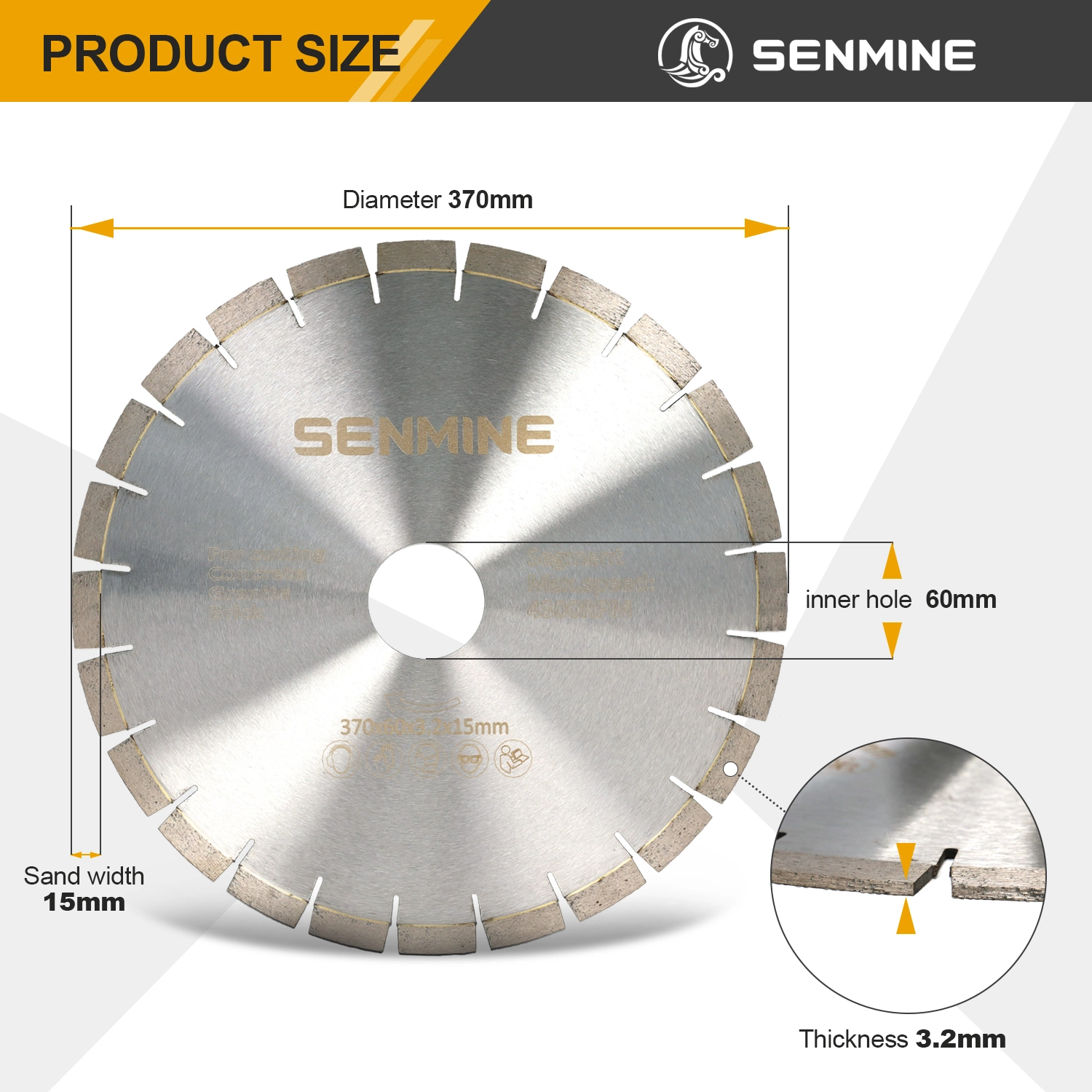
Granite saw blades are designed for cutting hard natural stone in fabrication shops, construction processing, and stone manufacturing applications. Whether the job involves granite slabs, countertops, tiles, or custom stone components, selecting the right diamond saw blade for granite helps improve cutting stability, edge quality, and working efficiency. SENMINE supplies granite cutting blades in multiple diameters, segment structures, and machine-fit options to support different processing requirements. From bridge saw production cutting to smaller trimming and fabrication work, our granite saw blades are built to match real stone-cutting conditions and practical sourcing needs.
What Granite Saw Blades Are Used For
Granite is a dense and abrasive material, so cutting performance depends heavily on choosing a blade structure that can handle high resistance while maintaining cutting consistency. Granite saw blades are commonly used for cutting granite slabs, producing countertop pieces, trimming sink openings, sizing stone panels, and processing hard natural stone in workshops or project supply environments. In many applications, users need a granite cutting blade that combines reliable diamond exposure, stable segment retention, and efficient debris removal to keep production moving without excessive chipping or loss of cutting speed.
Different jobs place different demands on the blade. Some operations focus on straight slab cutting with larger machines, while others involve smaller fabrication steps that require more control and smoother handling. A well-matched diamond saw blade for granite helps support more consistent cutting results, better segment life, and cleaner workflow in repeated stone-processing operations.
Granite Saw Blades by Machine Type
Granite Bridge Saw Blades
Bridge saw applications usually require larger granite saw blades built for straight cutting on slabs, blocks, and countertop pieces. In these jobs, cutting depth, cutting stability, and blade durability are all important. Granite bridge saw blades are often selected for workshop production where repeated cutting efficiency matters and the blade must perform reliably under heavier cutting loads. For slab fabrication, the correct blade helps maintain better cutting consistency while supporting a smoother production rhythm across multiple pieces.
Granite Blades for Angle Grinders
Smaller granite cutting blades are often used on angle grinders for trimming, edge adjustment, detail cutting, or lighter fabrication work. These blades are useful where flexibility and control are needed, especially for smaller jobs or finishing steps after larger cuts have already been completed. A granite blade for angle grinder use is typically chosen based on diameter, cutting method, and the type of granite being processed.
Granite Blades for Stone Cutting Machines
Granite saw blades can also be matched to different stone cutting machines depending on machine size, spindle requirements, arbor size, and working method. In these cases, proper blade matching is not only about diameter. It also involves checking the mounting standard, cutting speed expectations, cooling method, and whether the operation focuses more on productivity, cut finish, or general-purpose stone processing.
Segmented vs Turbo Granite Saw Blades
Segmented Granite Saw Blades
Segmented granite saw blades are often chosen for stronger cutting stability in harder stone processing conditions. The segmented structure helps with debris discharge and heat control, which can be beneficial during heavier cutting work or longer cutting cycles. For larger cutting equipment and repeated slab processing, segmented designs are commonly preferred where durability and steady performance are higher priorities.
Turbo Granite Cutting Blades
Turbo granite cutting blades are often selected for jobs that require a balance of cutting speed and smoother cutting action. They are commonly seen in smaller diameters and may be used for trimming, fabrication, or lighter workshop tasks where users want good cutting control and a cleaner finish. The best choice between segmented and turbo designs depends on the machine, the granite type, the cut depth, and the expected working condition rather than on one structure being universally better than the other.
Wet Cutting vs Dry Cutting for Granite
Many granite cutting operations benefit from wet cutting because water helps reduce heat buildup, improve dust control, and support more stable long-duration cutting performance. In slab cutting and heavier production work, wet cutting is often the more suitable method because it can help extend blade life and maintain more consistent cutting behavior. For harder granite materials, heat management becomes especially important during repeated use.
Dry cutting may still be suitable in certain smaller-scale applications, depending on the blade design and machine setup. However, dry cutting conditions place greater thermal stress on the blade, so it is important to use a granite cutting blade that is intended for that method. When selecting between wet and dry cutting, users should compare cooling conditions, dust control needs, working duration, cut quality expectations, and the actual machine environment. Matching the cutting method correctly helps improve performance and reduces the risk of premature blade wear.
How to Choose the Right Granite Saw Blade
Choose by Granite Hardness
Not all granite behaves exactly the same during cutting. Some materials are harder, denser, or more abrasive than others, which affects cutting speed, blade wear, and segment performance. When choosing a granite saw blade, it is important to consider the actual stone condition rather than selecting only by product name or diameter. A blade that performs well on one granite type may not deliver the same efficiency on another material with different hardness characteristics.
Choose by Diameter
Blade diameter should always match the machine and the cutting task. Smaller diameters are commonly used for grinders and lighter fabrication work, while larger blades are more suitable for bridge saws and slab cutting equipment. The correct diameter affects not only machine compatibility but also cutting depth, control, and working efficiency. For commercial sourcing, diameter range is often one of the first specification points to confirm.
Choose by Arbor and Mounting Requirement
Arbor size and mounting configuration must fit the machine correctly. In many export markets, machine standards and mounting preferences may vary, so this detail should be checked carefully before finalizing an order. For customers sourcing granite saw blades in quantity, custom arbor sizing or market-specific adaptation may be necessary to ensure the blades match local equipment requirements.
Choose by Cutting Goal
Some users prioritize faster cutting, while others focus more on smoother edges, better blade life, or stable performance in daily production. The right granite cutting blade should be selected according to the actual goal of the job. A workshop handling countertop fabrication may value edge quality and control, while a processing line cutting granite slabs may place greater importance on durability and output efficiency. The better the blade matches the real application, the better the overall cutting result tends to be.
OEM and Bulk Supply for Granite Saw Blades
For volume purchasing, granite saw blade selection usually involves more than choosing a single product size. Many orders require a combination of diameters, arbor standards, cutting methods, packaging details, and market-specific performance preferences. SENMINE supports OEM and custom supply requirements for granite cutting blades, helping customers match products more closely to their machine systems, local market expectations, and brand programs.
Customization can include specification adjustment, private label support, packaging arrangement, and other supply details based on project or distribution requirements. For importers, distributors, and industrial supply partners, this approach helps make sourcing more efficient and better aligned with long-term purchasing plans. When granite processing conditions differ from one market to another, a more targeted product setup can improve both product suitability and commercial consistency. To learn more about our company as a manufacturer, please review our company profile or Contact Us for project support.
FAQ
Q1. What blade type is commonly used for cutting hard granite?
Hard granite is usually cut with diamond saw blades designed for stone-processing applications. The most suitable structure depends on the machine, cutting method, and production goal. In many cases, users compare segmented and turbo designs based on durability, cutting stability, and finish requirements.
Q2. Can one granite saw blade be used for other stone materials?
Some diamond blades can be used on more than one stone material, especially within hard-stone processing applications. However, the best cutting result usually comes from selecting a blade that is well matched to the main material being processed most often.
Q3. Is wet cutting better for granite saw blades?
Wet cutting is often preferred in many granite applications because it helps control heat, reduce dust, and support longer and more stable cutting performance. The correct method still depends on the blade design and the machine setup being used.
Q4. How do I choose the correct diameter for a granite saw blade?
Diameter should be selected according to the machine specification and the cutting task. Smaller blades are more common for grinders and detail work, while larger blades are often used for bridge saw cutting and slab processing.
Q5. Can SENMINE provide custom arbor sizes or blade specifications?
Yes. For customers with specific machine standards or market requirements, custom arbor sizes, blade dimensions, and other specification adjustments can be discussed according to the order requirement.