
Views: 0 Author: Site Editor Publish Time: 2026-04-07 Origin: Site
Cutting porcelain tiles can be one of the toughest tasks in home renovation or construction projects. Porcelain is denser and harder than ceramic, which makes it resistant to wear — but also more challenging to cut cleanly. The good news? With the right diamond blade, proper setup, and a steady hand, you can achieve flawless, chip-free cuts like a professional.
This complete guide explains how to cut porcelain tile with a diamond blade, the tools you'll need, step-by-step cutting techniques, expert safety tips, and answers to the most common questions DIYers and contractors face.
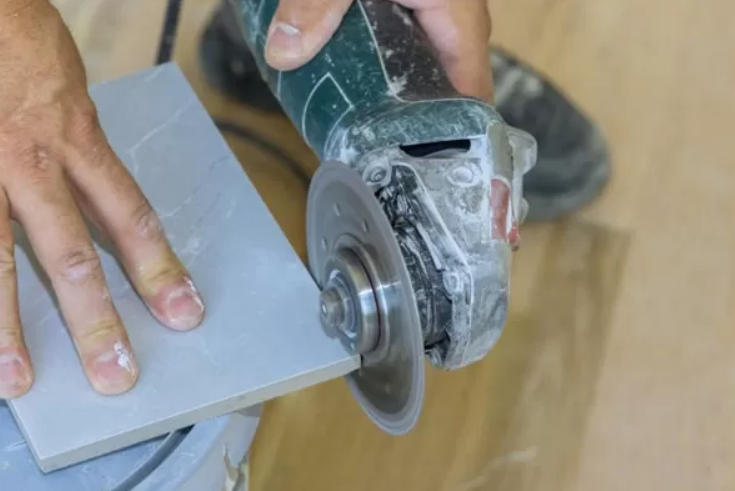
Before starting, make sure you have the right setup. Using professional-grade equipment makes a huge difference in both precision and finish.
Essential Tools and Supplies:
•Porcelain tiles
•Wet tile saw (preferably a sliding or table-type model for straight, consistent cuts)
•Diamond blade for porcelain tile (continuous rim or turbo rim)
•Measuring tape or steel ruler
•Pencil or tile marking pen
•Clamps or a cutting guide rail (to keep tiles steady during cutting)
•Safety glasses or face shield
•Dust mask or respirator
•Water source/reservoir (for cooling the blade)
•Hearing protection
•Waterproof gloves and non-slip footwear
•Diamond file or fine-grit sandpaper (for edge smoothing)
Pro Tip:
For smoothest edges on porcelain tiles, use a continuous rim wet-cut diamond blade. Turbo blades work faster but may leave slightly rougher edges — ideal for industrial cuts where finishing is less critical.

Start by measuring the required size using a tape measure or ruler. Mark the cutting line with a pencil or a wax-based tile marker. For glossy tiles, stick a strip of masking tape along the line before marking — this prevents smudging and helps reduce edge chipping during cutting.
Why it matters:
Accurate marking ensures minimal material waste and helps maintain uniform grout lines when installing tiles.
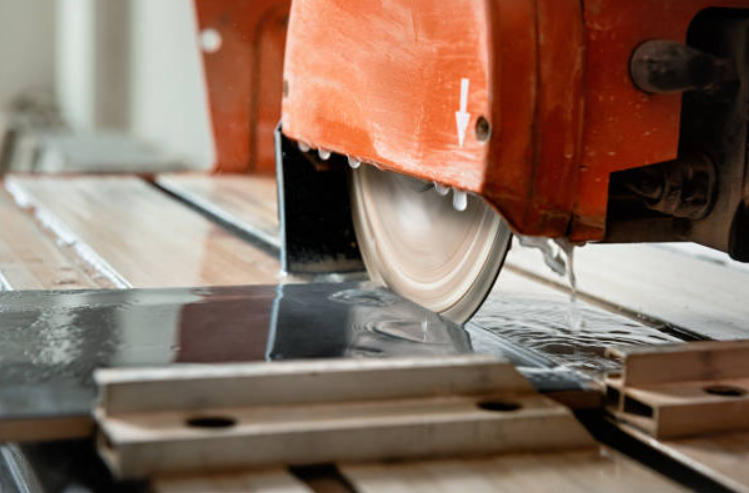
Fill the saw's water reservoir to the indicated level — water helps cool the diamond blade, minimize dust, and extend blade life. Make sure the water pump is functioning and delivering a steady stream to both sides of the blade.
Adjust the blade depth so that it extends about 1/4 inch (6 mm) below the tile's surface. Too deep, and it increases resistance and debris splash; too shallow, and the blade may not fully penetrate.
Quick Check:
Run the saw briefly to confirm smooth operation and proper water flow before cutting.
Before switching on the saw, put on your safety glasses, dust mask, gloves, and hearing protection. Make sure long hair and loose clothing are secured. Wet saws can be loud and generate fine dust — protect your hearing and lungs, even for short tasks.
Safety reminder:
Never reach toward the blade while it's spinning. Wait until it has completely stopped before removing or adjusting the tile.
Turn on the saw and allow the diamond blade to reach full speed. Hold the tile firmly on both sides, keeping your hands clear of the blade's path. Slowly guide the tile into the blade using steady, even pressure — don't force it. The diamond blade should do the cutting work for you.
Listen carefully:
A consistent humming sound means the blade is cutting correctly. If you hear a harsh grinding or slowing noise, reduce pressure or check water flow.
When the cut is almost complete, slow down slightly to prevent the last section from snapping or chipping. Support both sides of the tile until the blade finishes cutting through.
Pro Tip:
For large-format tiles, use a sliding table saw for greater control and accuracy. For narrow strips (less than 2 cm), cut slowly and use a clamp to stabilize the tile.
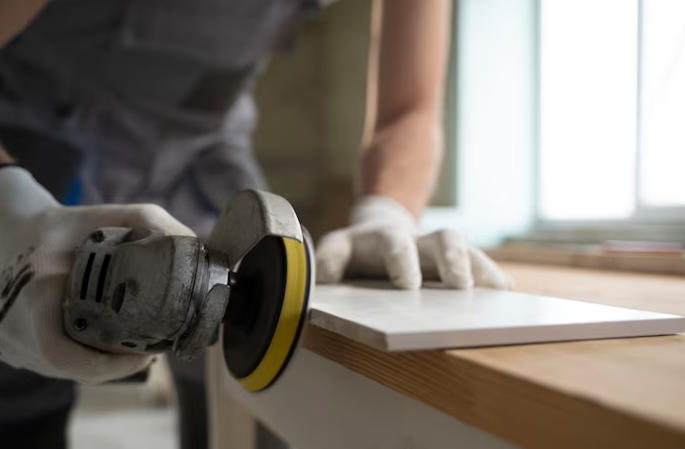
After cutting, turn off the saw and let the blade stop completely. Remove the tile carefully and inspect the edge. It should look clean, with minimal chipping.
If necessary, smooth the edges with a diamond file or fine sandpaper. This step not only improves safety but also helps ensure tight, clean joints during installation.
Finally, drain and clean the water tray to prevent slurry buildup and extend the saw's life.
•Go slow: Speed causes heat and vibration, which lead to chips and cracks.
•Keep it wet: The water cools down the tool more effectively, so there is a smaller risk of overheating-related hazards.
•Use masking tape: Helps minimize surface chipping.
•Support both sides: Especially important for narrow or brittle tile pieces.
•Check blade condition: A dull blade increases chipping and can overheat quickly.
Sometimes, porcelain tiles require more than straight cuts — like fitting around pipes or corners.
Here's how to handle special shapes:
•Curved Cuts: Use an angle grinder with a small diamond blade. Score the curve lightly first, then make gradual passes until the piece separates cleanly.
•Hole Cutting: For circular holes (e.g., pipes or fixtures), use a diamond hole saw designed for porcelain. Always cool with water to prevent cracks.
•Inside Corner Cuts: Use a wet saw to make two intersecting cuts, then finish with a nipper or diamond file for precision.
The best blade for cutting porcelain is a high-quality diamond blade designed specifically for porcelain or ceramic materials. Continuous rim blades deliver the cleanest finish, while turbo blades balance speed and durability. Always choose a wet-cut rated model to reduce dust and heat.
Yes, but results may vary. You can use:
•Manual tile cutters for straight scoring and snapping.
•Angle grinders with diamond blades for rough or small cuts.
•Tile nippers for trimming tiny sections.
However, for large or precision work, a wet tile saw is unmatched in accuracy and safety.
•Use a sharp diamond blade specifically for porcelain.
•Cut slowly and steadily — let the blade work naturally.
•Make sure the tile is securely supported.
•Use adequate water flow for lubrication.
•Apply masking tape along the cut line for added protection.
•Score first, then complete the cut gradually.
Cutting thin strips requires precision and control. Use a wet saw with a fine continuous rim blade and support both sides of the tile. If the piece is extremely narrow, secure it with clamps to prevent vibration. A tile nipper can fine-tune small adjustments afterward.
No. Regular saw blades aren't designed for porcelain's hardness and will dull or shatter quickly. They can also damage your saw. Always use a diamond blade designed specifically for tile cutting.
Over time, metal bonds can cover the diamond particles. To "sharpen" it, make several passes through a dressing stone, concrete block, or old ceramic tile. This exposes new diamond edges, restoring cutting efficiency.
Cutting porcelain tiles with a diamond blade is all about patience, precision, and preparation. The right blade and technique will give you smooth, professional results every time — without chips, cracks, or wasted materials.
Take your time, ensure proper cooling, and always prioritize safety. Once you've mastered the process, even the hardest porcelain tiles will cut cleanly and beautifully, ready for flawless installation.


