

Granite Saw Blade Problems: 8 Common Issues and How to Fix Them
Even with a brand-new granite saw blade, problems show up quickly if somet hing is wrong: chipped edges on countertops, blades turning blue from heat, cuts that wander off line, or a blade that suddenly refuses to bite into the stone. Most of these issues are not random. They follow clear patterns that can be traced back to setup, machine condition, blade choice, and cutting technique.
This troubleshooting guide focuses on real granite saw blade problems that fabricators, installers, and contractors deal with every day. It explains how to recognize each symptom, what usually causes it, and the practical steps that actually fix it on site or in the shop. If you are still unsure which granite saw blade to buy for your material and machine, start with a Granite Saw Blades Buying Guide first, then use this troubleshooting list to keep those blades running safely and efficiently in daily work.

Safety and Setup Checklist Before You Start Troubleshooting
Personal Protection and Dust Control for Granite Cutting
Before chasing any cutting problem, the basics must be in place. Granite dust contains crystalline silica, which can cause serious lung disease when inhaled over time. Even when wet cutting reduces airborne dust, there is still splash, slurry, and fine residue in the air. At a minimum, operators should use appropriate respiratory protection, safety glasses or a face shield, hearing protection, and sturdy gloves. Good ventilation, local exhaust, and proper housekeeping around saws and grinders are also essential, especially in enclosed shops.
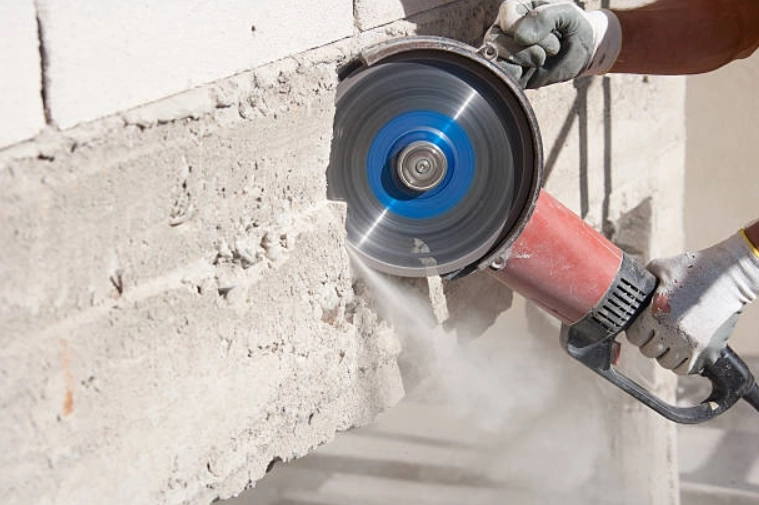
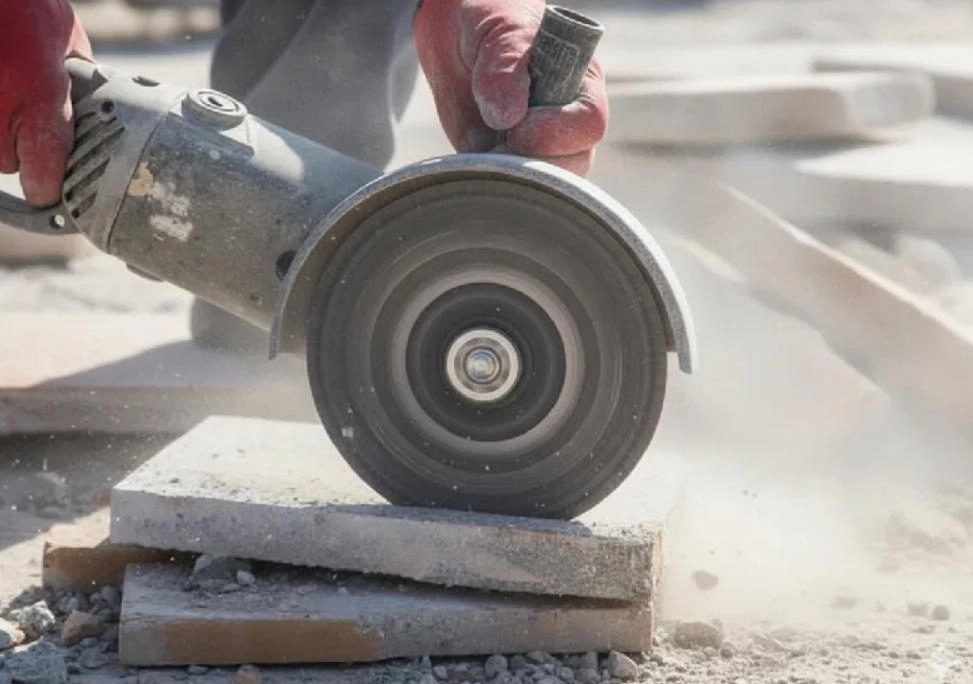
Outdoor cutting reduces risk but does not remove it. Dry cutting granite, even with a small angle grinder, can generate a dense cloud of dust around the operator and anyone nearby. Water-fed tools, dust shrouds with vacuums, and planned cutting zones help keep exposure under control. From a blade perspective, a wet-rated granite saw blade combined with adequate water flow is one of the simplest ways to improve both safety and blade life. Troubleshooting should always be built on a foundation of safe personal protection and dust control.
Basic Setup Checks: Direction, Tightening and Support
Many granite saw blade problems can be traced back to simple setup errors. Before assuming the blade is defective, check that it is mounted in the correct direction. Most blades have an arrow on the core indicating the intended rotation. Running the blade backwards still moves through the stone, but the diamond segments are not presented correctly to the material, which increases glazing and chipping. Ensure flanges and arbor surfaces are clean and free of slurry or rust, and tighten the blade according to the saw manufacturer’s recommendations – neither loose enough to slip nor so tight that the core is distorted.
Support for the granite is just as important. A slab that is only supported near the ends will flex during cutting, pinching the blade and causing vibration, wandering cuts, or even core cracks. The cut line should be fully supported, with enough clearance for the blade to pass without binding. Check guard position, water delivery, and cable routing so the operator can work with a relaxed stance and steady feed. Solving these basic issues often eliminates chipping, burning, and wobble before more complex adjustments are needed.
Problem 1: Granite Edges Are Chipping or Breaking Out
Symptoms and Typical Causes
Chipping is one of the most common granite saw blade problems. It appears as small pits or larger breakouts along the cut edge, often worst at the top surface of a countertop or the exit point of the cut. On sink cutouts and front edges, even tiny chips can ruin the appearance and increase polishing time. Chipping tends to worsen when cutting very hard granites, when the blade is dull or incorrect for the job, or when the material is poorly supported.
Common causes include using a coarse segmented blade for finish cuts, feeding too fast, cutting completely dry on polished surfaces, or starting and ending the cut without proper control. A glazed blade that rubs instead of slicing cleanly through the stone also contributes to chip formation, particularly if the operator presses harder in an attempt to force the cut.
Quick Fixes: Feed Speed, Blade Type and Entry Technique
To reduce chipping, start with speed and control. Use a steady, moderate feed rate instead of pushing as hard as possible. Let the diamonds grind through the granite at a consistent pace. If the cut starts with a small plunge near the edge, consider beginning a few centimeters in from the corner and then extending the cut, which reduces the tendency of the edge to break away. For cuts on polished surfaces, wet cutting with a turbo or continuous rim granite blade usually gives far fewer chips than dry cutting with a coarse segmented design.
If a blade is already leaving heavy chips, switch to a finer rim and make shallower passes, especially near the top surface. On high-visibility edges, many fabricators rough cut with a faster blade and then recut the last few millimeters with a fine continuous rim granite blade before polishing. This two-step approach combines productivity with edge quality and is often the fastest way to achieve a chip-free finish.
Long-Term Solutions: Right Blade and Proper Support
For a long-term solution, match blade design to the type of cut. Use segmented blades where appearance is secondary (pavers, steps) and reserve turbo or continuous rim blades for visible edges and countertop work. Support slabs close to the cut line, and avoid cutting over voids or gaps in the table that encourage breakout as the stone flexes. When working with very brittle or exotic granites, plan for additional support under the cut, especially near corners and narrow sections around sinks or appliances.
A good diagnostic habit is to examine both the top and bottom edges of a cut. Heavy chipping on the top points to issues with blade design, entry technique and feed speed. Breakout on the bottom often indicates poor support or exiting the cut too aggressively. Adjusting both support and blade choice reduces chipping at both faces and cuts polishing time significantly.
Problem 2: The Blade Overheats, Burns or Turns Blue
How Overheating Damages Granite Blades
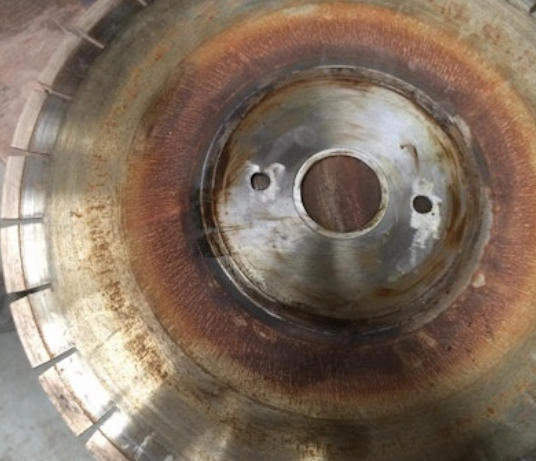
Overheating shows up in several ways: the blade core turns blue or straw-colored, there is a burning smell, or the blade starts to warp and wobble. In extreme cases, segments can crack at the brazed joint or separate from the core. Granite cutting generates intense friction heat at the diamond segments, especially during long, deep cuts or when the blade is pushed too hard. If heat is not removed, the metal bond softens, the steel core loses temper, and the blade’s structural integrity is compromised.
Once a granite saw blade has been severely overheated, performance often declines permanently. The core may no longer run true, and the bond may have altered hardness, leading to either rapid wear or chronic glazing. Overheating is therefore not just a short-term inconvenience; it shortens blade life and can create serious safety risks if the blade is kept in service despite visible damage.
Cooling, Water Supply and Cutting Pattern Adjustments
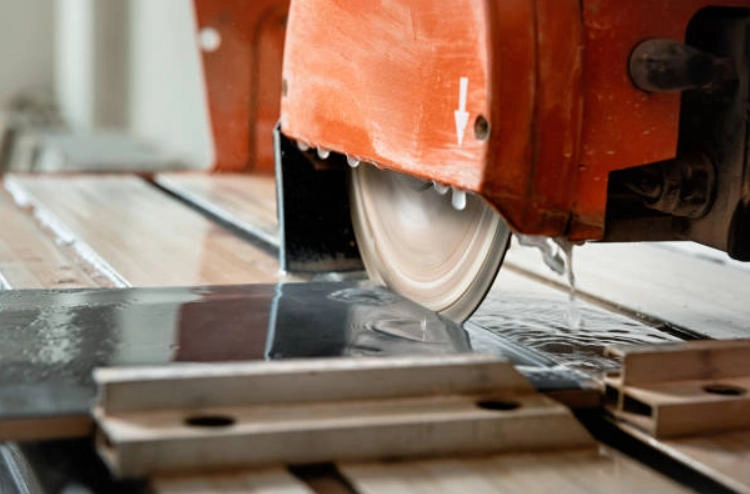
The first line of defense against overheating is water. A wet granite saw blade with an adequate, steady water supply runs cooler, cuts faster, and carries away abrasive slurry. Check that water jets are aimed correctly at both sides of the blade, that hoses are not kinked or blocked, and that the flow rate is sufficient to reach the cut instead of being deflected by guards or splashes. If water is available but overheating persists, review feed rate. A slower, consistent feed plus adequate water usually brings blade temperature under control.
Cutting pattern also matters. Long, deep cuts in thick granite benefit from “step cutting” – making multiple passes at increasing depths rather than forcing the blade to full depth in a single pass. This reduces the contact area at any moment and gives the blade more time to shed heat. Allowing the blade to spin freely in air for a few seconds between cuts can also help cool the core and segments.
When Dry Cutting Granite, How to Manage Heat Safely
Dry cutting granite should always be approached with caution. If water is impossible, a dry-rated granite blade with a turbo or segmented rim should be used, and the cut divided into short, controlled passes. Operators need to listen and feel for rising heat: a change in sound, sparks at the rim, or a burning smell are signs to pause and let the blade cool. Holding the grinder or saw in one place and grinding without progress is a guaranteed way to overheat and damage the blade.
It is also important not to mix blade types. A blade clearly marked “wet use only” should not be used for extended dry cuts, no matter how convenient it seems in the moment. The risk of core distortion and segment loss is too high. When dry cutting is a regular part of granite work, investing in dedicated dry/wet granite saw blades and adjusting technique for heat control is far safer than improvising with blades that were never designed for dry operation.
Problem 3: The Blade Won’t Cut or Cuts Very Slowly
Glazed Segments and Why a Blade Loses Its Bite
A common complaint is that a granite saw blade “just stopped cutting” even though plenty of segment height remains. In many cases, the blade has become glazed. The diamonds at the working surface have worn down or fractured, but the bond is not shedding them fast enough. Instead of sharp particles gripping and grinding the granite, the blade rides on a smooth layer of dull diamonds and metal. Friction increases, heat rises, and cutting speed falls dramatically.
Glazing is usually linked to an overly hard bond for the material, insufficient feed pressure over time, or prolonged cutting at low penetration rates. When a blade is allowed to skim the surface without doing real work, diamonds polish themselves and stop biting. The effect is similar whether the granite is extremely hard or the operator is being too gentle in an attempt to avoid chipping.
Dressing the Blade: Simple Methods That Restore Cutting Speed
Dressing restores cutting performance by exposing fresh, sharp diamonds. The basic idea is to run the blade through an abrasive material softer than granite but hard enough to abrade the bond. Dressing stones designed for diamond blades work well, as do old silicon carbide blocks or specific low-strength concrete blocks. Several passes at normal cutting speed and moderate feed usually remove the glazed outer layer and bring the blade back to life.
The key is to dress before the blade is completely ineffective. Light, regular dressing keeps segments open and cutting cleanly, whereas waiting until the blade is almost useless requires more aggressive dressing and risks uneven wear. Dressing should be part of routine maintenance, especially in shops where blades are switched between different materials or where cutting schedules vary.
Matching Bond and Grit to Granite Hardness
If glazing keeps recurring despite regular dressing, the bond may simply be too hard for the granite being cut. Hard, low-abrasion granites need a relatively soft bond so dull diamonds can break free. Softer or more abrasive stones can tolerate a harder bond because the material itself helps wear the bond down. A granite saw blade with the wrong bond hardness will either wear too quickly or glaze repeatedly, costing time in both dressing and cutting.
Diamond grit size also affects cutting behavior. Finer grits give smoother cuts but can glaze faster if feed rates are too low, while coarser grits cut aggressively but may leave rougher edges. Granite-specific blades from manufacturers like SENMINE are formulated to balance bond and grit for typical granite fabrication, which is one reason they behave more predictably than generic “masonry” or “multi-purpose” blades.
Problem 4: Wobbling, Wandering Cuts and Crooked Kerfs
Mechanical Causes: Flanges, Bearings and Bent Cores
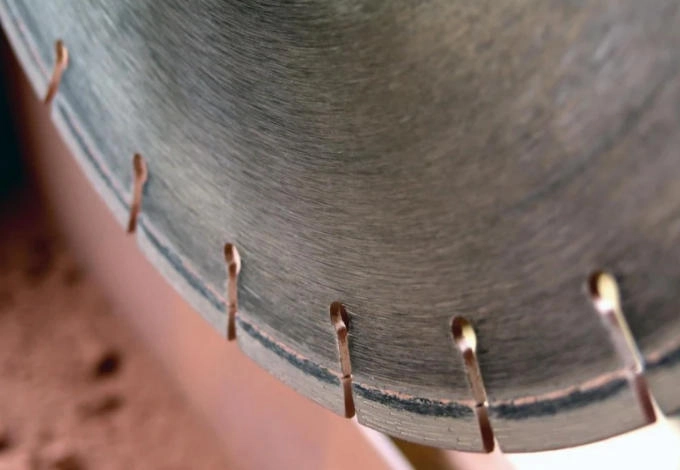
If a granite saw blade wobbles visibly or leaves a kerf that fluctuates in width, mechanical issues are likely. A bent core from previous overheating, impact, or incorrect storage will never run perfectly straight. Damaged or dirty flanges can misalign the blade on the arbor, creating runout. Worn bearings or shaft play in the saw add further movement that shows up as wobble and vibration during cutting.
Checking these components is essential before blaming the blade. Inspect the core for warping or cracks, clean the flanges thoroughly, and spin the saw without load to feel for bearing noise or play. If the core is visibly distorted or flanges are damaged, replacing them is the only safe option. A straight, well-supported core is the foundation of accurate granite cutting.
Operator Technique: Start, Feed and Support
Even with a perfect machine, poor technique can generate wandering cuts. Starting the cut without a clear line or template lets the blade skate across the surface, especially on polished granite. Pushing sideways to correct small errors during the cut also bends the blade and widens the kerf. Feeding too fast or forcing the saw to turn tight curves with a straight blade overloads the rim and encourages deflection.
A better approach is to score a shallow guide cut first, especially for long, straight lines, and then deepen it in subsequent passes. Let the saw or grinder follow that track without aggressive side pressure. Support the granite well along the whole cut line, and avoid cutting freehand in mid-air or over large gaps in the table. When curves are needed, switch to tools and blades designed for radius cutting instead of forcing a straight granite blade to turn.
When It’s Time to Retire a Damaged Granite Blade
Some blades cannot be saved. Deep core cracks, severe warping, or repeated segment loss are non-negotiable signs that a granite saw blade has reached the end of its safe life. Continuing to use such a blade risks catastrophic failure, which could injure the operator and destroy valuable stone. Even if the blade still “cuts”, wobble, uneven kerfs, and vibration marks indicate that geometry is compromised beyond acceptable limits.
A simple rule is to retire any granite blade that shows structural damage, cannot run true even on clean, undamaged flanges, or requires excessive pressure just to stay in the cut. Replacing a suspect blade is cheaper than dealing with a broken slab or a safety incident. When uncertain, consult a professional manufacturer such as SENMINE, sharing photos or measurements so an informed judgement can be made about continued use.
Problem 5: Excessive Noise and Vibration Marks on Granite
Why Some Blades Are Louder Than Others
Noise is an often overlooked granite saw blade problem. All cutting generates sound, but some blades and setups produce a harsh, ringing noise that quickly becomes tiring or even harmful. Standard steel cores transmit vibration and resonance, especially at higher RPMs. Silent-core blades with damped or layered cores reduce this effect but cost more. Machine design, mounting, and the way the blade engages the stone also influence perceived noise levels.
A blade under stress, with uneven segment wear or minor core distortion, tends to “sing” more loudly. Running too fast, cutting with too little water, or forcing the blade through a binding kerf all increase vibration and noise. Over time, operators instinctively push away from these uncomfortable conditions, which can lead to inconsistent feed and poorer cut quality.
How to Reduce Noise on Site Without Changing the Blade
Even without switching to a silent-core granite blade, noise can be reduced by tuning the cutting setup. Adequate water flow dampens vibration and cools the rim, softening the sharp, metallic sound that comes from a dry, overheated blade. Ensuring that the granite is fully supported reduces chatter as the blade passes through, which lowers both noise and the likelihood of vibration marks on the stone.
Slowing the feed slightly and avoiding sudden changes in pressure also helps. When the blade is allowed to cut at a consistent rate, it runs more smoothly and quietly. Regular dressing prevents glazed, friction-dominated cutting that tends to be louder than true grinding. These small adjustments improve comfort, cut quality, and blade life without any change in hardware.
Problem 6: Using One Blade on Different Materials (Granite, Marble, Concrete, Tile)
What Happens When You Use the Wrong Material Mix
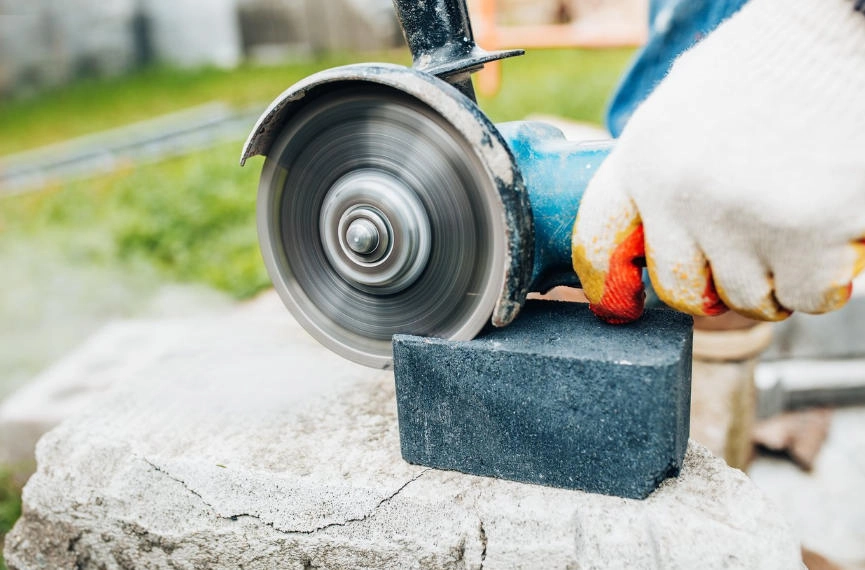
It is common to ask whether one blade can handle granite, marble, concrete and tile. While some premium blades can cut multiple materials, each stone behaves differently. Granite is very hard and less abrasive, marble is softer and more prone to clogging, and concrete is often abrasive with embedded aggregates and sometimes steel. A blade optimized for one may perform poorly on another.
Using a granite-tuned blade for frequent concrete cutting can wear the bond too quickly, while using a hard-bond concrete blade on granite encourages glazing and overheating. Switching repeatedly between soft and hard materials without cleaning or dressing also causes segments to load with incompatible slurry, which hurts cutting performance on all materials.
Prioritizing Your Main Material and Choosing a Compromise Blade
If granite is the primary material, blade selection should revolve around granite performance. Occasional cuts in other stones can be accepted as secondary use, with an understanding that life or speed may be reduced in those cases. For contractors who must cut a mix of granite and concrete regularly, a compromise blade with bond and segment design tuned for both may be worth considering, but expectations must be realistic.
In some operations, keeping separate blades is more efficient: one set specifically for granite countertops and another for concrete work such as grooves and openings. Separating blades by material prevents cross-contamination, extends life, and keeps cutting quality predictable. The added complexity of managing blade inventory is often offset by reduced troubleshooting and rework.
When to Invest in Separate Blades for Different Stones
A good guideline is volume. Once there is enough work in each material to justify it, separate blades should be used. Granite fabrication shops benefit from dedicated granite saw blades for their bridge saws and hand tools, while concrete contractors typically need their own concrete-optimized blades. Trying to stretch one “universal” blade across both leads to chronic performance issues in at least one area.
When work expands into deeper or more complex cuts in concrete and masonry around granite structures, advanced tools such as ring saws and wall saws may enter the picture. Guides like Ring Saw Machine: The All-rounder for Cutting Rugged Materials and The Ultimate Guide to Concrete Saw Types and Selection can help clarify where granite blades end and concrete cutting solutions should begin.
Problem 7: Blade Life Is Too Short and Costs Are Too High
Overheating, Wrong Bond and Excessive Pressure
Short blade life is often a symptom of other problems rather than a stand-alone issue. Overheating from insufficient water or aggressive dry cutting accelerates wear on both bond and core. An incorrect bond hardness for the granite causes either rapid wear (bond too soft) or glazing and overload (bond too hard). Excessive feed pressure in an attempt to force a dull blade through the stone compounds these effects, turning a modest issue into a costly failure.
Granite saw blades are designed to operate within a specific envelope of speed, pressure, and cooling. When used within that envelope, life is predictable. When pushed outside of it, life becomes short and erratic. Identifying and correcting the underlying causes of overload and heat is the first step in extending blade life and reducing overall cutting costs.
How to Extend Granite Blade Life with Simple Daily Habits
Several small habits can dramatically increase blade life. Keeping water lines clean and ensuring consistent flow prevents localized overheating. Regularly dressing the blade keeps segments open and avoids energy-wasting glazing. Storing blades flat or hanging them properly, rather than tossing them into piles, protects cores from warping and segments from accidental impact.
Avoiding accidental cuts into steel supports, clamps, or thick backing materials also matters. A single collision with a hidden steel bar can chip segments and start cracks that later lead to failure. Visual inspection before and after use catches damage early, when it is still possible to remove a blade from service before more serious problems arise.
Tracking Blade Cost per Meter (or per Job)
To judge whether blade life is acceptable, tracking simple numbers helps. Recording how many meters of granite are cut or how many countertops are processed per blade gives a clearer picture than relying on impressions. A blade that costs more but reliably cuts twice as much material is cheaper per meter than a bargain model that fails early.
This way of thinking shifts focus from purchase price to total cost of ownership. For high-volume shops, blades become part of a cost-controlled process rather than unpredictable consumables. Manufacturers like SENMINE can support this approach by providing guidance on expected life under specific conditions, allowing users to benchmark real-world performance against technical data and adjust their processes accordingly.
Problem 8: Blade Cracks, Segment Loss or Core Damage
Typical Causes of Segment Loss on Granite Blades
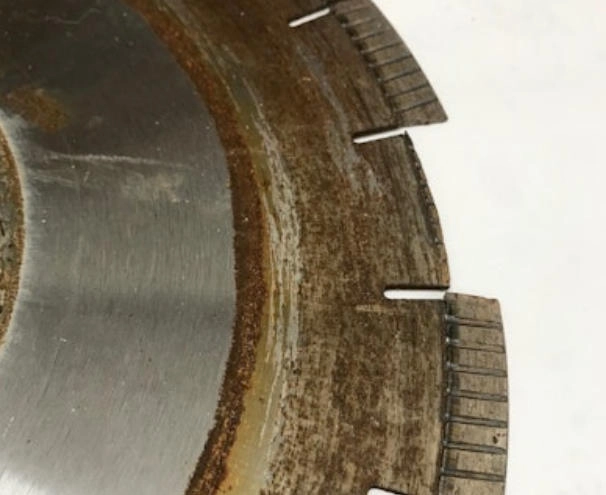
Segment loss is one of the most serious granite saw blade problems. When segments break off during cutting, they can damage the stone, jam the saw, or become high-speed projectiles. Common causes include severe overheating, side pressure from forcing tight curves or correcting misaligned cuts, impact with steel reinforcement or clamps, and pre-existing cracks in the core. Poor brazing or manufacturing defects are possible but less common than misuse in everyday practice.
Granite’s hardness means that any misuse is punished quickly. Over-tightened flanges, bent cores, or badly worn bearings raise stress levels in the blade. Combined with thermal cycling from intermittent water flow and aggressive feeds, the risk of segment loss increases sharply.
When Repair Is Possible and When It’s Not Worth the Risk
In some industrial settings, cores and segments can be inspected and re-tipped by specialized service companies. However, this only makes sense when damage is limited, the core is in good condition, and repairs are carried out to high standards. For most users, especially where visible cracks, multiple missing segments, or heavy warping are present, the safest choice is to retire the blade entirely.
Continuing to run a granite saw blade with known structural damage is never justified by the cost of a replacement. The potential harm to operators and the risk of destroying expensive slabs or countertops far outweigh any short-term saving. If there is doubt about a blade’s safety, it should be removed from service and evaluated by a competent professional.
Preventing Future Core and Segment Damage
Prevention centers on controlled cutting conditions. Avoid side loading by letting the blade follow its natural path without forcing tight curves. Use appropriate tools for radius cuts instead of bending straight blades around corners. Ensure that supports and clamps do not intersect the cut line, and scan for hidden metal when cutting in structural elements. Maintain water flow and avoid sudden transitions between dry and wet operation, which can introduce thermal shock.
A routine inspection schedule, combined with operator training on correct handling and mounting, greatly reduces the chances of serious core and segment failures. Working with a reputable manufacturer such as SENMINE also means that blade design, brazing quality, and material selection have already been optimized for demanding granite applications, leaving technique and maintenance as the main variables to manage.
Maintenance Routine for Granite Saw Blades (Daily, Weekly, Monthly)
Daily: Cleaning the Blade and Checking the Segments
At the end of each shift, blades should be rinsed to remove slurry and stone dust. Dried slurry hardens on the core and between segments, increasing imbalance and heat on the next use. A quick visual check for missing, cracked, or chipped segments and obvious core damage catches many problems early. Any blade showing structural defects or severe wobble should be tagged and removed from regular circulation.
Light dressing can also be part of the daily routine if cutting conditions that day were particularly demanding. Keeping segments clean and open avoids the need for aggressive dressing later and ensures that blades start the next job ready to cut rather than struggling from the first pass.
Weekly: Dressing and Inspecting Flanges and Guards
Once a week, a more thorough maintenance session pays off. Blades that have seen heavy use should be dressed on a suitable block, bringing all segments back to a sharp, even profile. Flanges and arbors should be cleaned and checked for wear, as damaged mounting surfaces can introduce runout and shorten blade life. Guards and water jets should be inspected to confirm they are intact, correctly positioned, and free of obstructions.
This is also a good time to verify that each blade is clearly labeled for its main application (granite, concrete, multi-material) to reduce the chance of cross-use by busy crews. Simple labeling and storage systems prevent many troubleshooting issues before they start.
Monthly: Performance Review and Replacement Planning
On a monthly basis, reviewing granite saw blade performance helps with planning and cost control. Compare estimated meters of cut, number of jobs completed, and the frequency of problems such as chipping, overheating, or dressing. Blades that frequently appear in troubleshooting logs may not be suited to the specific granite, machine, or cutting style in use and could be replaced with a better-matched model.
Planning replacements in advance reduces pressure to run borderline blades “a bit longer” when they should be retired. It also allows time to consult with a diamond tools manufacturer like SENMINE about improved formulations or different segment designs that match actual job conditions more closely.
Troubleshooting Table: Quick Reference for Granite Saw Blade Issues
• Chipping at top edge – Blade too coarse, feed too fast, dry cutting on polished surface → Switch to turbo/continuous rim, wet cut, support slab and slow feed.
• Chipping at bottom edge – Poor support under exit point → Add support, reduce feed near exit, avoid cutting over gaps.
• Blade overheating/turning blue – Insufficient water, excessive feed, long dry cuts → Increase water flow, step cut, use dry-rated blade only for short passes.
• Blade not cutting / very slow – Glazed segments, bond too hard → Dress blade, increase feed slightly, consider softer-bond granite blade.
• Wobbling or wide kerf – Bent core, dirty or worn flanges, bearing play → Clean/replace flanges, check saw bearings, retire damaged blades.
• Very noisy cutting – Dry cutting, high RPM, vibration → Use water, improve support, check for segment wear and dressing.
• Short blade life – Overheating, wrong bond, too much pressure → Improve cooling, choose granite-specific bond, adopt steadier feed.
• Segment loss/core cracks – Side loading, impact with steel, severe overheating → Correct technique, avoid hidden metal, remove damaged blade from service.
FAQs: Common Questions About Using Granite Saw Blades
• Can I cut granite dry in a garage if I wear a mask?
Dry cutting granite indoors is strongly discouraged. Dust levels can rise quickly beyond what a single mask can safely handle, and the space fills with fine silica that is hard to remove. If cutting in a garage is unavoidable, use wet cutting with containment, adequate ventilation, and appropriate respiratory protection, or move the cutting operation outdoors where dust can disperse more safely.
• How fast should I feed the blade when cutting thick granite?
There is no single speed that fits all combinations of blade, machine, and granite. A good starting point is a steady feed that keeps the blade working without bogging the motor or causing visible deflection. If chipping appears, slow down slightly and consider step cutting. If the blade starts to glaze and slow down, dress it and check that the bond is appropriate for the stone.
• How often should I dress my granite saw blade?
Dress the blade whenever you notice a clear drop in cutting speed, increased noise, or shiny, polished segment surfaces. In steady production, light, regular dressing is better than waiting until the blade is nearly useless. Some shops adopt a schedule, such as dressing after a certain number of countertops or meters of cut, to keep performance consistent.
• How do I know if my granite blade is installed in the right direction?
Most granite saw blades have an arrow on the core showing the intended rotation direction. Match this arrow to the rotation indicated on your saw. If no arrow is present, examine the segment shape; many are designed to face forward in a particular way. When in doubt, consult the manufacturer’s documentation or contact a technical support team for confirmation before cutting.
When to Talk to a Manufacturer Instead of Guessing
Repeated granite saw blade problems are a sign that it is time to move beyond trial and error. When chipping, overheating, short life, or segment loss keep coming back despite careful setup and technique, the blade’s design may simply not match the material and machines in use. In those situations, working directly with a specialized manufacturer is far more productive than endlessly switching retail models.
SENMINE focuses on diamond tools for real-world construction and stone fabrication. Sharing information about your granite types, saw models, cutting patterns, and problem history allows the SENMINE engineering team to propose specific granite saw blade formulations and segment designs tailored to your needs. Whether you are a fabricator, contractor, or distributor looking for OEM solutions, a direct technical conversation often turns troubleshooting into a clear, forward plan. Contact Us to discuss your projects and turn persistent granite saw blade problems into a stable, predictable cutting system.